Buying and selling stocks is one of the most accessible ways to start investing, allowing individuals to own a portion of companies and participate in their growth. While it may seem complicated at first, the actual process is very straightforward. Stocks are traded on major exchanges like the New York Stock Exchange and the NASDAQ, but instead of going through these exchanges directly, investors use brokerage platforms to place trades in just a few clicks.
1. Opening a Brokerage Account
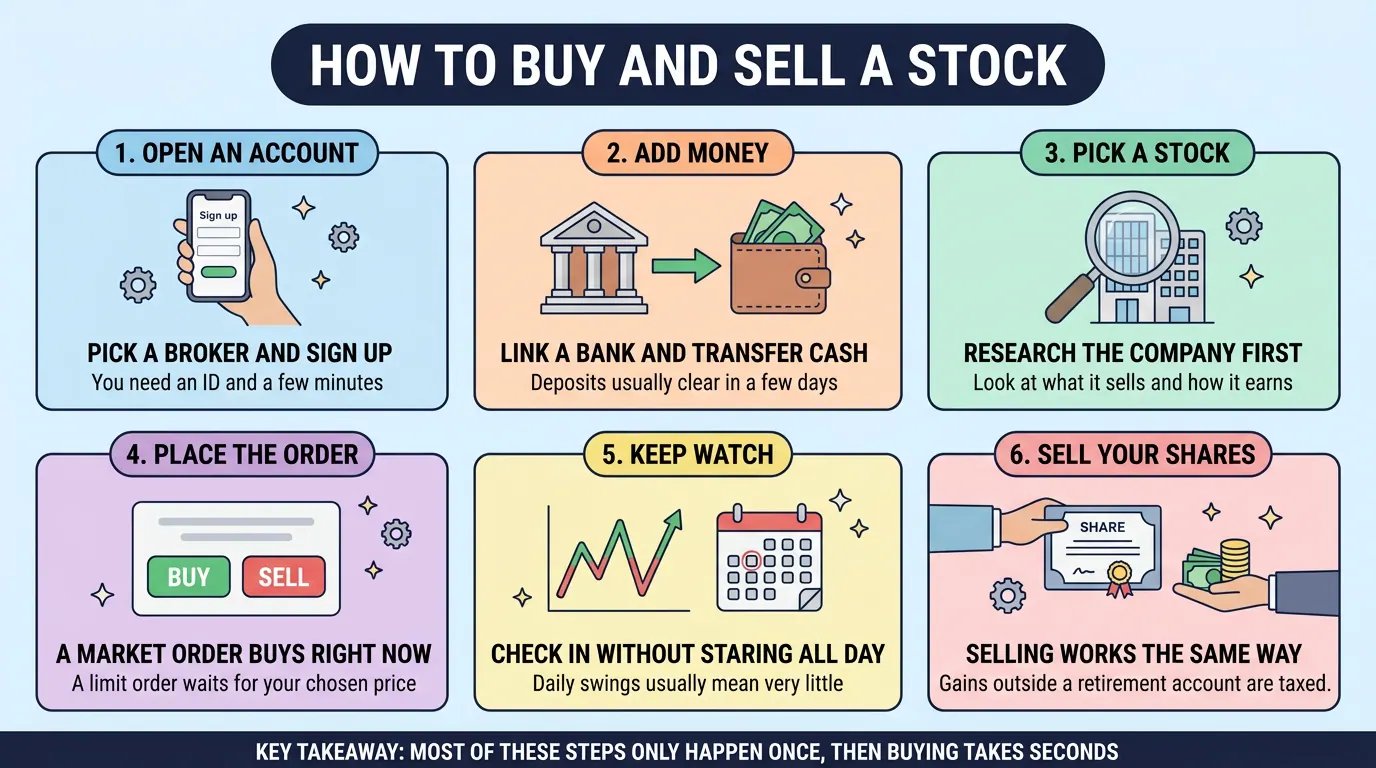
The first step to buying and selling stocks is opening a brokerage account. This is a financial account that allows you to access the stock market and manage your investments. Brokerages act as the middleman between you and the market, handling the technical side of executing trades. Some beginner-friendly platforms include Robinhood, Fidelity Investments, Charles Schwab, and E*TRADE. Opening an account usually involves entering basic personal information, verifying your identity, and linking a bank account. There are many step-by-step guides online, including videos on YouTube, as well as instructions directly on the brokerages’ websites. Once your account is approved, you’re ready to start investing!
2. Adding Money to Your Account
After setting up your account, you’ll need to deposit money into it. This is usually done through a bank transfer, and once the funds arrive, they appear as cash in your brokerage account. Many platforms allow you to start with a small amount of money and even offer fractional shares, meaning you can buy a portion of a stock instead of a full share. This makes it easier to begin investing without needing a large upfront amount.
3. Choosing a Stock
Choosing what to invest in is one of the most important parts of the process. A stock represents ownership in a company, so when you buy one, you are investing in that company’s future. Many beginners start with well-known companies or broad market investments like the S&P 500, which tracks hundreds of large companies and provides diversification. Instead of trying to find the perfect stock, the goal is to make informed decisions based on basic research, such as understanding what the company does and how it makes money.
4. Placing a Buy Order
Once you’ve chosen a stock, you place a buy order through your brokerage. This is the step where you actually purchase shares. The most common option is a market order, which buys the stock immediately at the current price. Another option is a limit order, where you set the price you are willing to pay. The order will only go through if the stock reaches that price. After the order is completed, the shares are added to your account, and you officially own part of that company.
Two other order types are worth knowing, and both are usually used to limit losses on a stock you already own. A stop-loss order sits inactive until the stock falls to a trigger price you set, at which point it turns into a market order and sells at whatever the going price is. That distinction matters, because in a fast drop the price can blow straight past your trigger and the sale can fill well below it. A stop-limit order adds a floor, so it will never sell below the limit you set, but that protection comes with a catch: if the price keeps falling and no buyer meets your limit, the order simply never fills and you keep the shares.
5. Monitoring Your Investment
After buying a stock, its price will naturally move up and down throughout the day. These fluctuations are completely normal and happen because of supply and demand, company performance, and overall market conditions. For beginners, it’s important to focus on the long term instead of reacting to every short-term change. Constantly checking your portfolio or making emotional decisions can hurt your results. Avoid FOMO (fear-of-missing-out): don’t rush to buy a stock just because its price is rising, and don’t panic-sell all your shares when prices fall. Patience and consistency are key to better long-term outcomes.
6. Selling a Stock
Selling a stock works the same way as buying, just in reverse. You select the stock in your account, choose how many shares you want to sell, and place an order. You can use a market order (sell at market price) to sell immediately or a limit order (sell at a price you decide) if you want to wait for a specific price. Once the sale is completed, the money is added back to your account as cash, which you can withdraw or reinvest. Keep in mind that US stock trades settle one business day after the trade (a standard known as T+1, in place since May 2024), so the proceeds may show up in your account right away but are not actually withdrawable until settlement finishes.
Summary
Buying and selling stocks involves a simple process: open a brokerage account, deposit money, choose investments, and place trades. While the steps are easy to follow, successful investing comes from patience, discipline, and a focus on long-term growth. By starting small and continuing to learn, beginners can build confidence and gradually become more comfortable navigating the stock market.