How to Actually Buy and Invest in Commodities
For decades, the commodity market felt like an exclusive club for Wall Street insiders and massive industrial corporations. The idea of a regular person trading barrels of oil or bushels of wheat seemed completely impractical. However, the financial industry has evolved significantly. Today, anyone with a smartphone and a basic brokerage account can add raw materials to their investment portfolio.
Investing in commodities can provide excellent diversification. Because the prices of raw materials often move independently of the traditional stock market, they can act as a financial shock absorber during times of inflation or geopolitical stress. If you are looking to get started, there are three primary and highly accessible ways to invest.
Holding Physical Assets
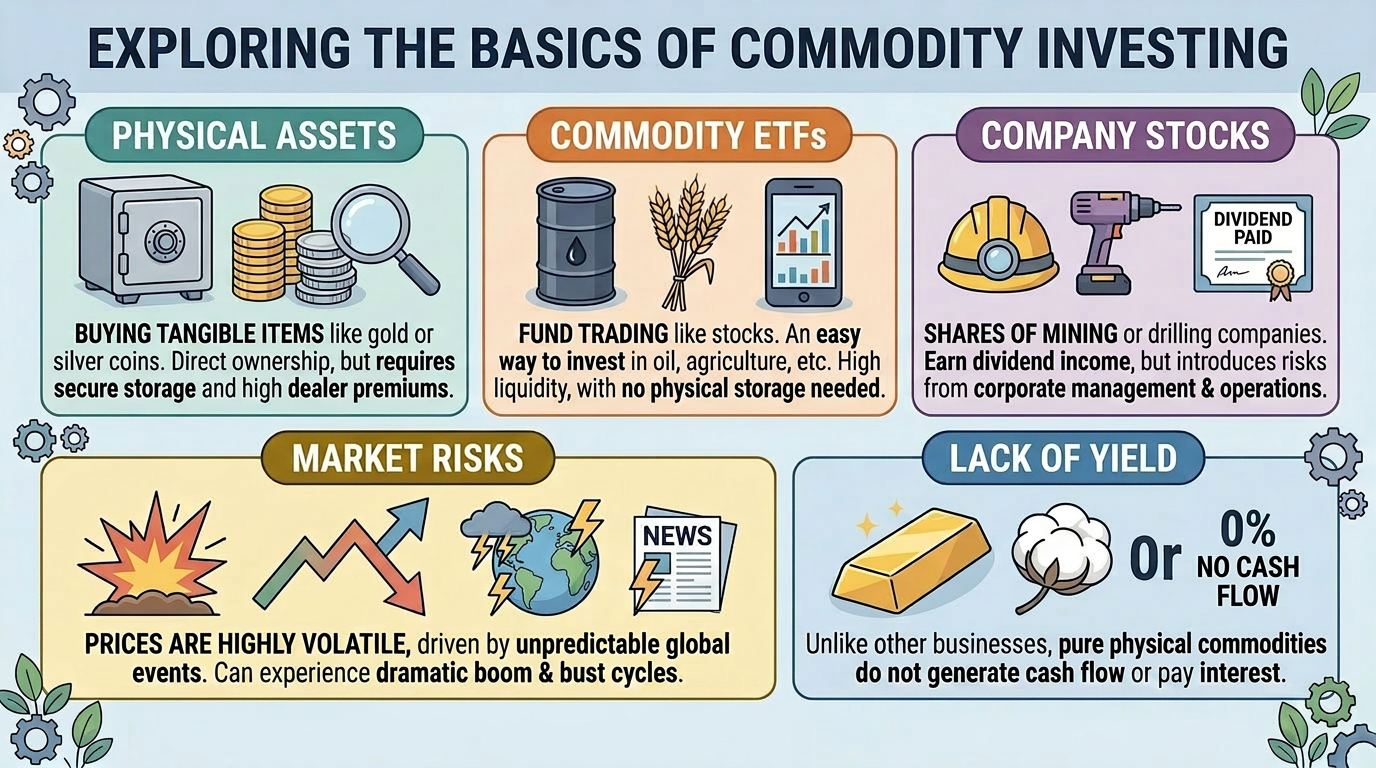
The most ancient and straightforward way to invest in a commodity is to simply buy the physical item and hold onto it. In practice, this is almost exclusively limited to precious metals like gold and silver. You cannot practically store barrels of crude oil in your garage or keep tons of copper wiring in your basement.
Buying physical gold bars or silver coins offers a unique sense of security. You own a tangible asset that carries no counterparty risk, meaning its value does not depend on a company or government keeping a promise. Many investors treat physical metals as a financial insurance policy against severe economic downturns.
However, physical ownership comes with serious logistical challenges. You have to pay high premiums over the actual market price just to purchase the physical coins. Once you own them, you must figure out how to safely store and insure them. Finally, when it comes time to sell, finding a reputable buyer and shipping heavy metals can be a slow and expensive process.
Commodity ETFs
Exchange Traded Funds, commonly known as ETFs, are widely considered the easiest and most efficient way for regular people to invest in commodities. An ETF is a specialized investment fund that trades on major stock exchanges just like a regular company stock. You can buy or sell shares of a commodity ETF through any standard brokerage app with a single click.
Some ETFs are physically backed. For example, a gold ETF might actually hold billions of dollars worth of physical gold bars in a secure vault in London. When you buy a share of that ETF, you essentially own a tiny fraction of that physical gold without ever having to worry about storage or security.
Other ETFs use financial contracts to track the price of commodities that are too difficult to store, such as crude oil or agricultural crops. These funds allow you to directly profit from the rising price of energy or food staples. The massive advantage of ETFs is their extreme liquidity. You can buy into the global oil market at breakfast and sell your position before lunch, all for incredibly low fees.
Buying Stocks in Commodity Companies
If you do not want to buy the raw materials directly, you can take an indirect route by investing in the companies that extract and refine them. This means buying shares of publicly traded oil drillers, copper miners, or agricultural producers.
When the price of a commodity goes up, the companies that pull it out of the ground usually see their profits skyrocket. This makes their stock prices rise. Furthermore, unlike a physical bar of gold or a barrel of oil, well managed companies actually generate cash flow. Many of the world's largest mining and energy companies pay out regular dividends, providing you with a steady stream of passive income simply for holding their stock.
The major trade off with this method is that you are taking on corporate risk. A mining company's stock might crash if they experience a labor strike, a mine collapse, or a scandal involving poor management, even if the global price of the metal they mine is currently hitting record highs. You are investing in the business of the commodity rather than the commodity itself.
The Speculative Reality and Risks
While commodities can protect your portfolio from inflation, they are incredibly volatile investments. Unlike the broader stock market, which historically trends upward over long periods, commodity prices tend to move in wild boom and bust cycles. A sudden change in weather patterns, a new technological breakthrough, or a geopolitical conflict can cause prices to double or crash in a matter of weeks.
Additionally, pure commodities do not produce anything on their own. A gold coin will just sit in a safe. It will never invent a new product or pay you a dividend. Your entire return relies on the hope that someone else will eventually be willing to pay more for it than you did.
Summary
You do not need to be a Wall Street trader to invest in the building blocks of the global economy. Physical ownership of gold and silver provides tangible security but requires careful storage. Commodity ETFs offer a highly liquid and low cost way to track the prices of everything from oil to wheat directly from your brokerage account. Finally, buying shares in mining and energy companies allows you to profit from the commodity boom while potentially earning dividend income. By understanding these accessible avenues, you can use raw materials to build a more resilient financial portfolio.
