The Commodity Market: Structure, Function, and Core Mechanics
Everything you touch, eat, or use requires raw materials. The coffee you drink in the morning, the copper wiring in your phone, and the fuel that powers global shipping all start as physical commodities. However, before these goods reach consumers, they are traded on a massive, globally interconnected network known as the commodity market.
Understanding how this market operates offers a unique window into the global economy. It is a system built to balance supply and demand, manage financial risk, and set the baseline prices for the physical building blocks of our world.
Where and How Trading Happens
The commodity market is divided into two primary arenas that serve very different purposes.
The first is the spot market. In this arena, physical commodities are bought and sold for immediate delivery. If a local refinery needs crude oil right now to keep production running, they purchase it on the spot market. The prices here reflect the immediate, real time supply and demand for a physical product.
The second and much larger arena is the futures market. Instead of trading physical goods today, participants trade financial contracts. A futures contract is a legally binding agreement to buy or sell a specific quantity of a commodity at a predetermined price on a specific date in the future. These contracts are traded on centralized global exchanges, such as the Chicago Mercantile Exchange (CME) or the London Metal Exchange (LME). While some futures contracts result in the actual delivery of goods, most are settled purely in cash before they expire.
Not all trading happens on public exchanges. Massive volumes of commodities are traded directly between two parties in what is known as the Over The Counter (OTC) market. This allows buyers and sellers to customize their contracts based on specific needs, though it carries a higher risk since there is no centralized exchange to guarantee the trade.
Why the Market Exists
The commodity market is not just a casino for investors. It serves three vital economic functions that keep global industries running smoothly.
Price Discovery: By bringing together thousands of buyers and sellers from around the world, the market determines the fair value of a resource based on global information. A drought in Brazil or a sudden surge in demand for electric vehicles is instantly reflected in global commodity prices.
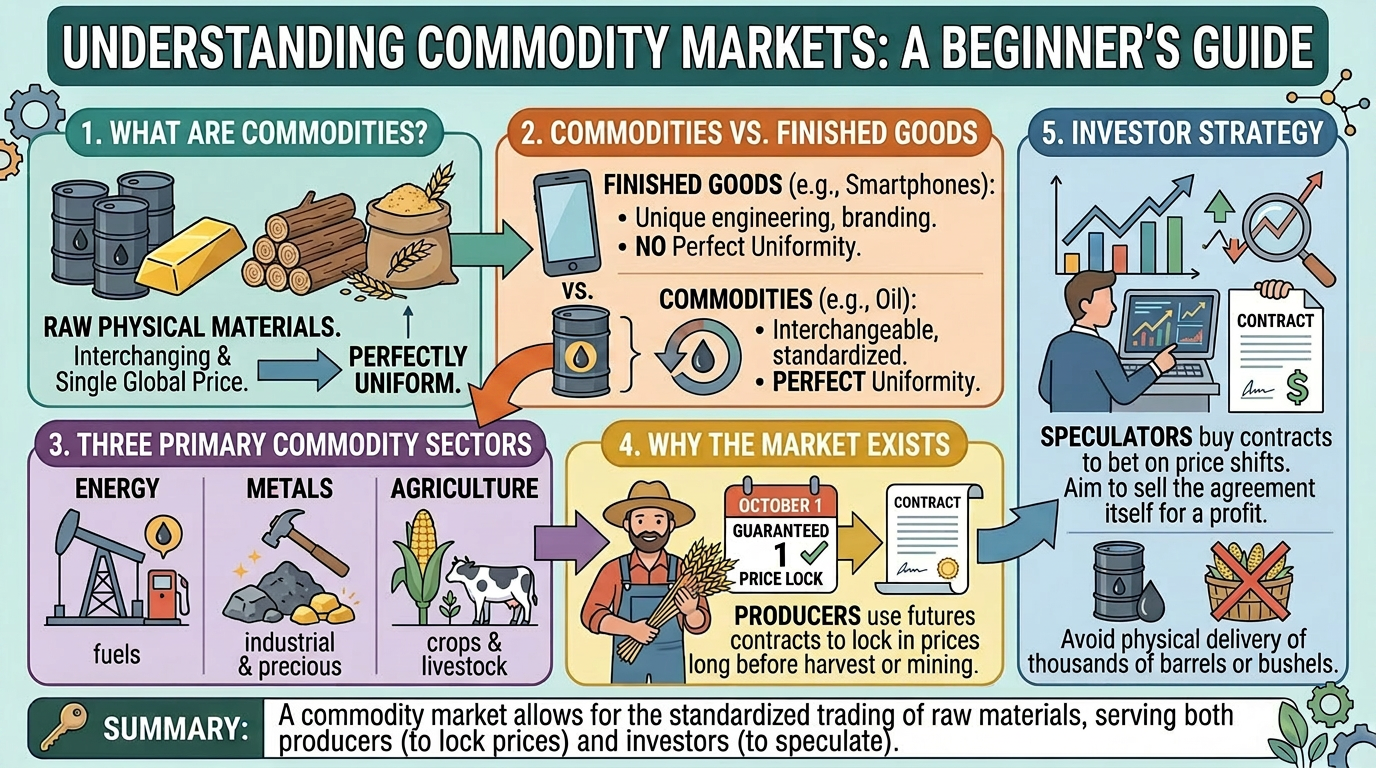
Hedging: This is the primary reason futures markets exist. A wheat farmer can sell futures contracts before the harvest to lock in a guaranteed price, protecting themselves if grain prices crash. Similarly, an airline can buy oil futures to lock in fuel costs, ensuring their ticket prices remain profitable even if oil prices spike later in the year.
Speculation: Speculators, such as hedge funds and individual traders, buy and sell commodities purely to profit from price movements. While they often get a bad reputation, speculators are essential. They provide the liquidity that allows farmers and airlines to easily find a buyer or seller when they need to hedge their risks.
Core Mechanics of Trading
For a global market to function, efficiency and trust are absolutely critical. This is achieved through strict standardization.
You cannot trade a futures contract for some random bundle of wheat. Every contract traded on an exchange specifies the exact grade, quality, and quantity of the commodity. For example, a single crude oil contract always represents exactly 1,000 barrels of a specific grade of oil. This standardization ensures that a buyer in Tokyo knows exactly what they are getting from a seller in Texas, making the contracts easily interchangeable and highly liquid.
Types of Commodities
Commodities are generally grouped into three main sectors, each driven by distinct economic forces and serving different global needs.
Energy: Commodities like crude oil and natural gas fuel global transportation and manufacturing. Their prices are heavily influenced by geopolitics and worldwide economic growth.
Metals: Materials such as gold, copper, and lithium are vital for electronics, automobiles, and construction. The market demand for these resources is driven by infrastructure spending and the push for new technology.
Agriculture: Crops including wheat, corn, and coffee feed the world. Unpredictable weather patterns and global population growth are the primary factors that dictate their market prices.
The Modern Trading Reality
Today, the commodity market is a highly sophisticated digital ecosystem. The traditional image of frantic traders shouting on an exchange floor has been entirely replaced by digital algorithms and artificial intelligence. Milliseconds matter, and prices react instantly to global news and shifting macroeconomic data.
Furthermore, the market is constantly adapting to new global realities. The accelerating transition to clean energy is rapidly reshaping demand. While oil remains a massive market, unprecedented capital is flowing into the metals required for electric vehicles and power grids, such as copper and lithium. Meanwhile, geopolitical tensions and extreme weather events continue to highlight how fragile global supply chains can be, making the risk management functions of the commodity market more critical than ever.
Summary
The global commodity market is the financial engine that prices and allocates the world's raw materials. It operates through spot markets for immediate physical delivery and futures markets for managing long term financial risk. By allowing producers to hedge against price drops and consumers to lock in costs, the market provides stability to the broader economy. Whether you are looking at an ear of corn or a barrel of oil, the price you pay is the result of millions of trades balancing global supply, demand, and future expectations.
