Every country in the world relies on money to keep its economy running, but they don't all use the same kind of money. In the United States, we use the dollar; in Japan, it's the yen; and across much of Europe, it's the euro. Because there is no single global currency, money must be traded across borders. This system is known as currency exchange, or foreign exchange (often shortened to Forex).
Understanding the Exchange Rate
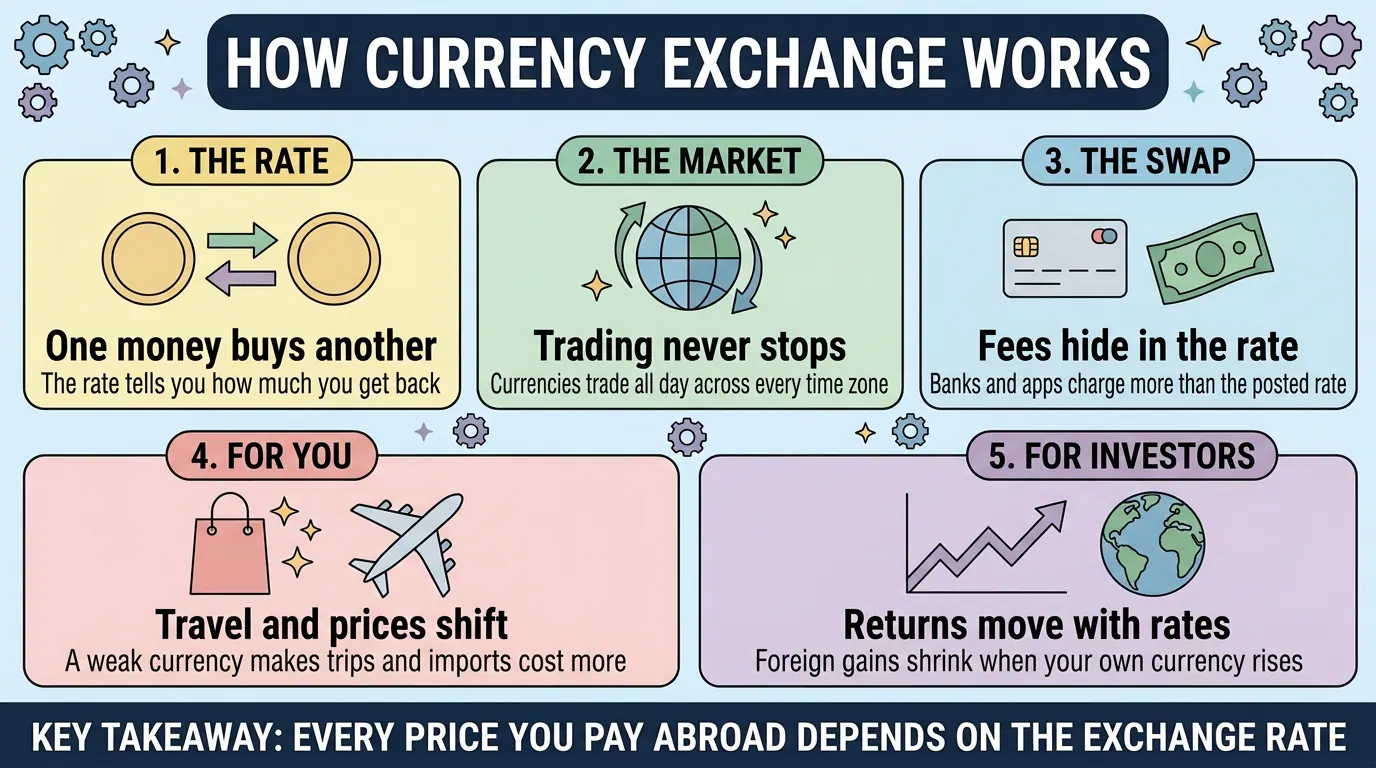
At its core, an exchange rate is simply the price of one currency compared to another. Think of money as a product you can buy. If you are traveling to Europe, you cannot spend U.S. dollars at a local bakery; you must "buy" euros using your dollars.
If the exchange rate is $1.10 to €1.00, it means it costs one dollar and ten cents to purchase a single euro. These rates are not fixed. They float up and down every second of the day based on global supply and demand, interest rates, and the overall health of a country's economy.
The Global Currency Market
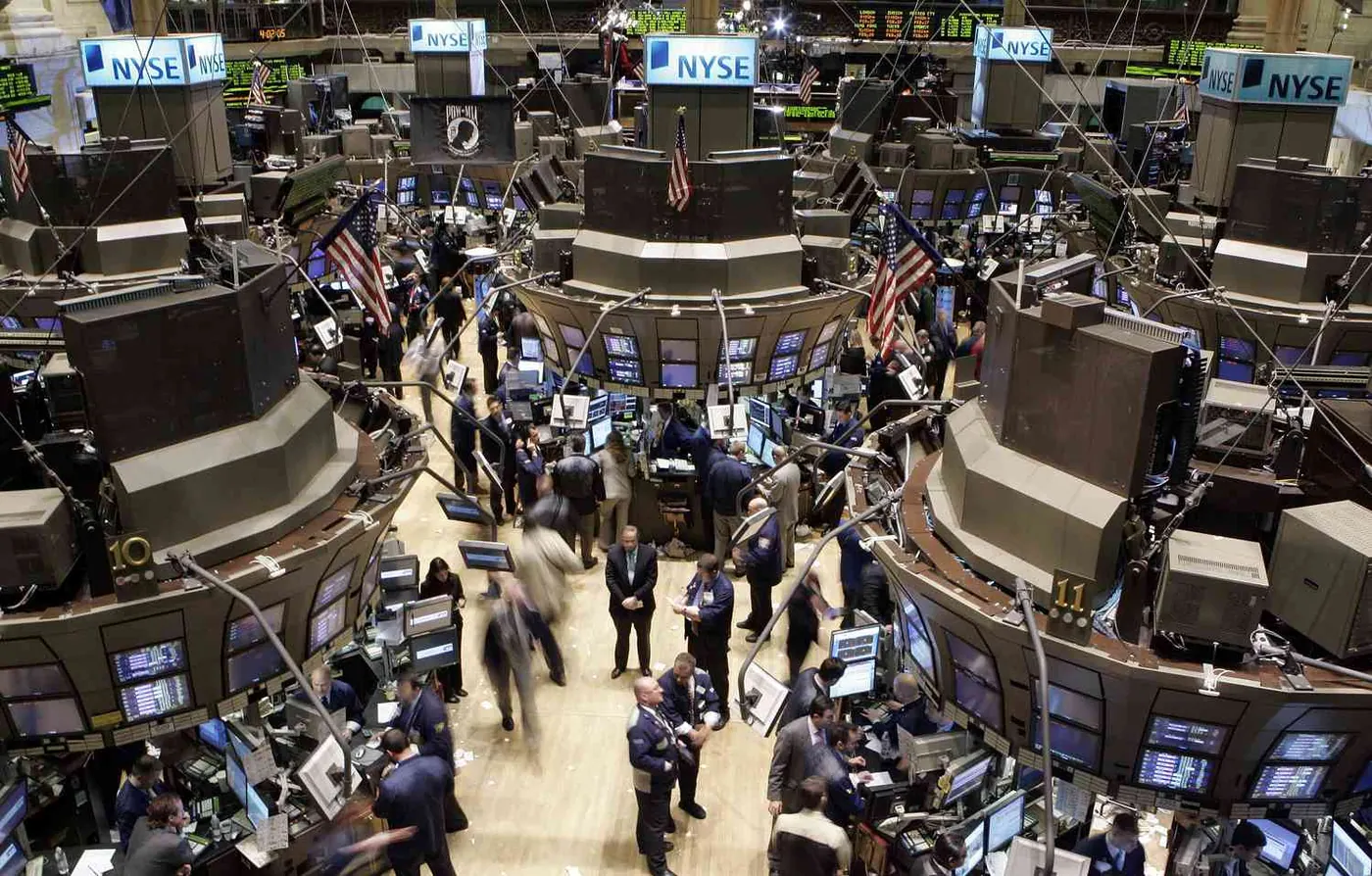
Unlike the stock market, which has physical headquarters like the New York Stock Exchange, the foreign exchange market is completely decentralized. It operates as a massive, global network of central banks, commercial banks, international brokers, and individual investors trading electronically across different time zones. Because the market is spread worldwide, from Tokyo and London to New York and Sydney, currency trading never stops during the business week. This continuous flow of trillions of dollars every day is what causes exchange rates to fluctuate constantly.
How to Actually Exchange Currency
If you need to get your hands on foreign money for travel or international payments, you have several different ways to make the exchange, each with its own pros and cons:
Traditional Banks: Most major banks offer currency exchange for their customers. This is generally a reliable and secure method, but banks often bake a "markup" into the exchange rate, meaning you get slightly less foreign currency than the official market rate dictates. Think of this like a fee you pay for trading stocks or for buying an ETF.
ATMs Abroad: Using a travel-friendly debit card at a foreign ATM is often the cheapest and most convenient way to get physical cash. While you still pay the ATM network's exchange rate, it is usually much closer to the true market rate than other options.
Digital Platforms and Apps: For sending money across borders or keeping cash in a digital multi-currency wallet, specialized online services offer near-market exchange rates and transparent fees. They are typically much cheaper than sending a traditional wire transfer.
Airport Kiosks and Exchange Stores: These physical booths are highly convenient when you are rushing to catch a flight, but they almost always offer the worst exchange rates and highest hidden fees. They should generally be viewed as a last resort.
Why It Matters for Everyday People
You don't need to be a world traveler to feel the effects of currency exchange. It impacts your daily life in a few hidden but significant ways:
The Cost of Travel: This is the most direct impact. If the U.S. dollar is "strong" (meaning it buys a lot of foreign currency), traveling abroad feels much cheaper. Your money stretches further for hotels, food, and souvenirs. If the dollar is "weak," a vacation to another country suddenly becomes much more expensive.
Everyday Shopping: Many of the goods we buy, from electronics and cars to clothing and groceries, are imported from other countries. If the U.S. dollar loses value against the currency of a manufacturing country, it costs more for companies to bring those goods into the U.S., and they pass those higher prices directly to you at the checkout line.
Sending Money Abroad: For families who send money across borders (known as remittances), a small shift in the exchange rate can mean a big difference in how much cash their loved ones actually receive on the other side.
Why It Matters for Companies
For businesses that operate internationally, currency exchange is a critical factor that can make or break their profit margins.
Importing Materials: A company that builds smartphones in the U.S. might need to buy microchips from Taiwan. If the U.S. dollar drops in value against the Taiwanese dollar, those microchips become more expensive to purchase. To survive, the company either has to accept lower profits or raise the price of its phones.
Exporting Products: Conversely, a weak currency can actually be good for exporters. If a U.S. farmer is selling wheat to Europe, a weaker U.S. dollar means Europeans can buy more American wheat for fewer euros. This makes American goods highly competitive on the global market.
Unpredictability: Because exchange rates fluctuate wildly, large companies often have entire departments dedicated to predicting these changes and protecting the business from sudden financial shocks.
Why It Matters for Investing
For investors, the currency market is both a tool to protect wealth and a massive arena for making money.
The Forex Market: The foreign exchange market is the largest financial market in the world, trading trillions of dollars every single day. Investors buy and sell currencies, hoping to profit from the shifts in exchange rates. For example, if an investor believes the British pound is going to rise against the U.S. dollar, they will buy pounds now and sell them later for a profit.
International Stocks: When you invest in a company based in another country, you are also secretly investing in that country's currency. If you buy shares in a Japanese company and the stock goes up, but the Japanese yen loses value against the U.S. dollar at the same time, your actual profits will be wiped out when you convert the money back to dollars.
Hedging: Savvy investors use currency investments as a shield. If they are worried that inflation is going to weaken their home currency, they might invest in the currencies of countries with stronger, more stable economies to protect their purchasing power.
Summary
Currency exchange is the invisible engine that connects the global economy. By determining how much one nation's money is worth compared to another's, it dictates the price of imported goods at your local store, the profitability of multinational corporations, and the strategies of global investors. Understanding how these rates fluctuate, and knowing the best ways to navigate the exchange market, helps explain why the cost of living and doing business is constantly shifting around the world.