Concrete Bets: Understanding Speculative Real Estate
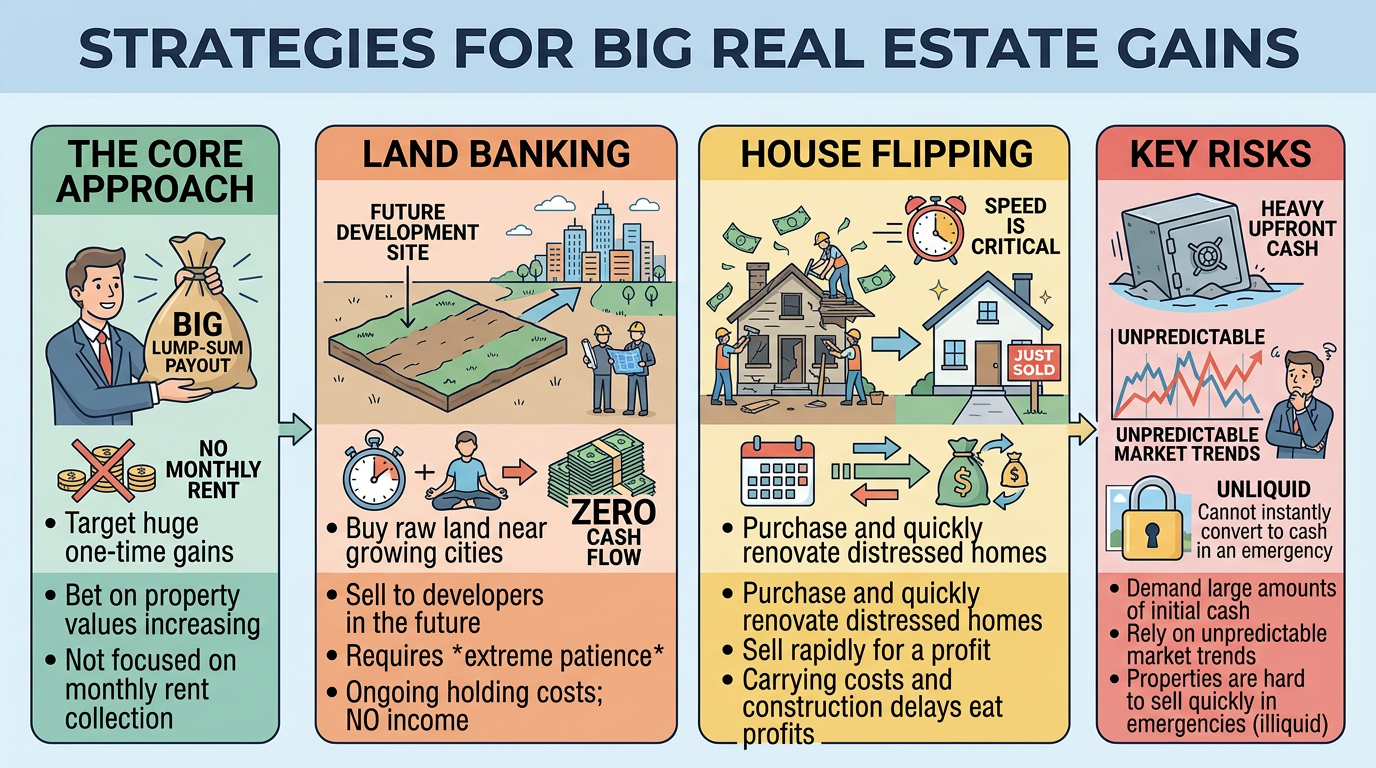
When you think of real estate investing, you might picture becoming a landlord and collecting monthly rent checks. However, there is another side to the market known as speculative real estate. Instead of relying on slow and steady rental income, speculative investors place large bets on future property values. They are looking for massive lump-sum (one time) payouts by capitalizing on urban growth or forcing a property's value to increase through intense renovations.
Land Banking: Waiting for the City to Expand
Land banking is the ultimate exercise in patience. In this strategy, investors buy empty, undeveloped land on the outskirts of a growing city or town.
The Strategy: The goal is to buy cheap dirt in the "path of progress." You hold onto the property, speculating that urban sprawl will eventually reach your lot. When residential neighborhoods or commercial shopping centers finally need room to expand, developers will pay a massive premium to take the land off your hands.
The Catch: Raw land does not generate any income while you wait. You still have to pay annual property taxes, insurance, and potential maintenance costs. If the city grows in a different direction or the local economy stalls, you could be left holding an empty field for decades.
The Race Against Time
Made famous by reality television, house flipping is the fast-paced and high-stress side of real estate speculation. It involves buying a heavily distressed property, renovating it, and selling it for a profit as quickly as possible.
The Strategy: Flippers look for the ugliest house in a desirable neighborhood. By investing in strategic repairs like a modernized kitchen, fresh paint, or a new roof, they "force" the property's value to go up. The profit is the difference between the final sale price and the combined costs of buying, holding, and renovating the home.
The Catch: Flipping is a strict race against the clock. Every month the house sits unsold, you are bleeding money to pay property taxes, utilities, insurance, and often high-interest loan payments. If construction gets delayed by bad contractors or the housing market suddenly cools down, your potential profit can vanish entirely.
Risks of Speculative Real Estate
Unlike standard rental properties that generate predictable cash flow, speculative real estate is an all-or-nothing game.
High Capital Requirements: You need significant cash to purchase raw land outright or to fund major home renovations.
Market Dependence: Your success relies heavily on macroeconomic factors you cannot control, such as rising interest rates, local zoning laws, or shifting neighborhood demographics.
Severe Illiquidity: Real estate takes time to sell. If you run into personal financial trouble and suddenly need cash, you cannot liquidate (convert the value of the house into cash) a house or a vacant lot overnight.
Summary
Speculative real estate is about betting on future value rather than present cash flow. Land banking requires deep patience as you wait for urban sprawl to increase the value of raw dirt. House flipping requires speed and project management skills to turn a distressed property into a quick profit before market conditions change. Both strategies offer high financial rewards but come with substantial risks, including expensive holding costs, unpredictable markets, and a lack of immediate liquidity.
