Tangible Wealth: The Rise of Passion Assets and Alternative Investing
When most people think of growing their wealth, they picture numbers on a screen like stocks, bonds, or digital currencies. However, a parallel financial universe has exploded into the mainstream: the market for alternative physical assets. From Renaissance paintings and Swiss watches to limited-edition sneakers and boxed LEGO sets, everyday objects are transforming into high-yield financial instruments.
The Psychology of Tangible Value
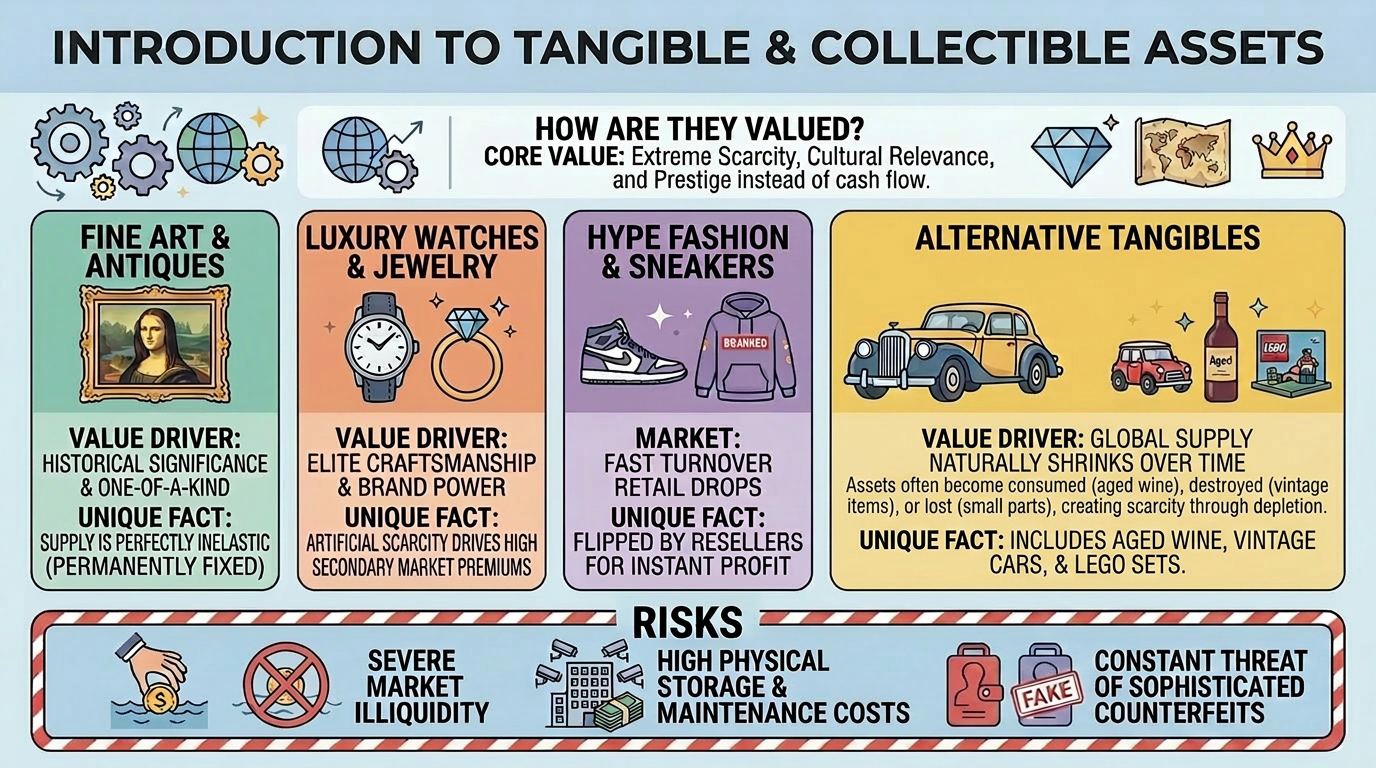
Unlike traditional investments, physical commodities do not pay dividends, generate interest, or report quarterly earnings. Instead, their value is dictated entirely by a combination of three factors: scarcity, cultural relevance, and prestige. When supply is strictly capped by history or corporate design, and demand from passionate collectors increases, prices skyrocket. For investors, these assets offer a way to diversify away from the stock market, banking on the idea that human desire for rare, beautiful, or nostalgic items will always exist.
Fine Art & Antiques
Fine art and historical artifacts represent the oldest and most institutionalized form of alternative investing. When a collector buys a sculpture, a midcentury modern furniture piece, or an oil painting, they are trading in cultural significance and absolute scarcity.
The Mechanics: The high-end art market operates much like the traditional stock market, complete with dedicated auction houses (like Sotheby’s or Christie’s) and professional appraisers.
The Value Driver: Because an artist can never replicate a historical masterpiece, the supply is perfectly inelastic (meaning the available quantity remains permanently fixed regardless of price). Value increases as the artist’s historical importance grows or as wealthy buyers look for highly visible status symbols to park their capital.
Luxury Watches & Jewelry
While jewelry has historically been prized for its raw precious metals and gemstones, modern luxury watch investing is driven by mechanical craftsmanship and extreme brand power. Brands like Rolex, Patek Philippe, and Audemars Piguet have mastered the art of artificial scarcity.
The Retail vs. Secondary Spread: Retail prices for these timepieces are often a fraction of their actual market value. Because manufacturers strictly limit production numbers, waitlists at authorized dealers can span years.
The Investment Play: This bottleneck forces buyers onto the secondary market, where highly coveted watch models frequently trade for double or triple their original retail prices the moment they leave the store.
Hype Fashion & Sneakers
On the younger, faster end of the investment spectrum sits "hype" streetwear and sneaker culture. Driven by brands like Supreme and limited-edition Nike Jordan collaborations, this market operates entirely on a hyper-accelerated cycle of artificial scarcity.
The "Drop" Model: Brands release highly anticipated products in incredibly limited quantities at random intervals, known as "drops."
The Resale Economy: Using specialized online platforms like StockX and GOAT, digital-savvy entrepreneurs (or "resellers") secure these items at retail prices and instantly flip them to collectors willing to pay astronomical premiums to participate in a cultural trend.
Alternative Tangibles
The world of tangible assets extends far into niche hobbyist communities. If an item can be collected, preserved, and aged, it can likely be financialized.
Liquid Assets: Rare wines and aged Scotch whiskeys are classic examples of consumables that naturally appreciate. As bottles from a specific vintage are opened and consumed, the remaining global supply shrinks, driving up the price for the surviving bottles.
Classic Cars: Vintage automobiles combine mechanical art with historical nostalgia. Well-preserved sports cars from the 1960s to the 1990s have outpaced many traditional asset classes in returns.
The LEGO Phenomenon: Surprisingly, retired LEGO sets have become a legendary alternative asset. When the LEGO Group stops manufacturing a specific set (like a massive Star Wars Millennium Falcon), the secondary market value for factory-sealed boxes almost immediately surges as new collectors enter the hobby.
Risks of the Tangible Market
While the allure of turning hobbies into fortunes is strong, alternative physical assets carry unique and severe risks that do not exist on Wall Street:
Illiquidity: You cannot cash out of a painting or a luxury watch with the click of a button. Finding a buyer willing to pay your asking price can take months or even years.
Storage and Maintenance: Physical wealth must be protected. Climate control, high-end security, and insurance premiums can quickly eat into your potential profits. A single scratch on a watch or a tear in a sneaker box can instantly wipe out its investment value.
The Threat of Counterfeits: As prices rise, the market becomes flooded with sophisticated fakes. Without expert authentication, investors risk spending thousands on worthless replicas.
Summary
Alternative tangibles turn consumer passion into financial speculation. Whether it is the historical prestige of fine art, the mechanical prestige of a Swiss watch, the trend-driven hype of a sneaker drop, or the nostalgic draw of a retired toy set, these assets rely entirely on the law of supply and demand. For the disciplined investor, they offer an exciting, tangible way to build wealth, provided they can navigate the high risks of maintenance, fraud, and market volatility.
