Why Commodity Prices Matter to Your Wallet
When you watch the financial news, you might hear analysts talking about the price of crude oil per barrel or the trading volume of wheat futures. It is easy to assume these numbers only matter to Wall Street traders. In reality, the commodity market is intimately connected to your personal bank account. The prices of these raw materials dictate almost every major expense in your daily life.
Understanding this connection helps explain why your grocery bill suddenly spikes or why it costs more to heat your home during certain seasons.
How Crude Oil Impacts the Gas Pump
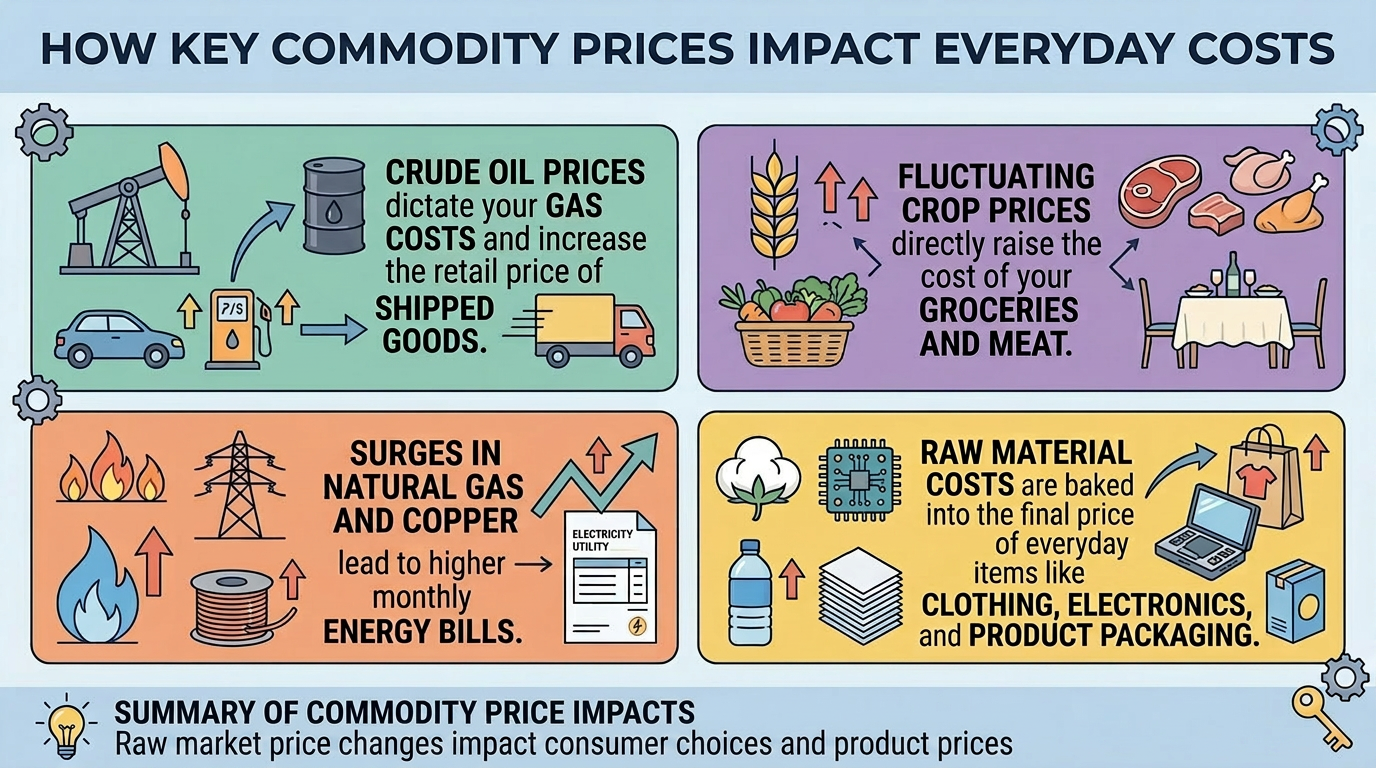
The most obvious connection between global commodities and your wallet happens at the gas pump. When geopolitical tensions or supply chain issues cause the price of crude oil to rise, the cost of a gallon of gasoline goes up almost immediately. However, the impact of expensive oil extends far beyond your daily commute.
Oil is the lifeblood of global transportation. When diesel prices rise, it costs more to operate the cargo ships, freight trains, and delivery trucks that bring products to your local stores. Businesses rarely absorb these higher shipping costs. Instead, they pass them directly to you by raising the final retail price of everything from clothing to electronics.
The Link Between Weather and Your Grocery Cart
If you have ever wondered why the cost of a basic trip to the supermarket feels unpredictable, you have to look at agricultural commodities. The prices of staple crops like wheat, corn, and soybeans are highly sensitive to extreme weather, droughts, and global demand. When a poor harvest causes the price of wheat to spike, the cost of bread, cereal, and pasta naturally goes up.
There is also a hidden ripple effect in the meat aisle. Corn and soybeans are the primary ingredients in livestock feed. If the price of these crops rises, it becomes much more expensive for farmers to raise cattle and poultry. This ultimately leads to higher prices for beef, pork, and chicken at the deli counter.
Natural Gas and Copper on Your Utility Bill
Your monthly electric and heating bills are directly tied to the energy commodity market. A massive percentage of the global power grid is fueled by natural gas and coal. When a severe winter storm hits and millions of people turn up their thermostats, the sudden demand for natural gas causes its market price to soar. Utility companies often pass these fluctuating fuel costs directly to consumers.
Furthermore, upgrading and maintaining the power grid requires massive amounts of industrial metals. Copper and aluminum are essential for electrical wiring and transformers. When the prices of these metals climb, infrastructure projects become more expensive. Utility companies eventually recover these costs by raising their baseline service rates.
Hidden Surcharges in Consumer Goods
Beyond the obvious categories of food and fuel, commodity prices sneak into your budget in several hidden ways.
Packaging costs are a prime example. Most plastic packaging is derived from petroleum products, while cardboard relies on the lumber and paper pulp markets. A surge in lumber or oil prices means companies spend more just to box their goods, creating an invisible surcharge baked into the final retail price.
The clothing and tech industries are also heavily exposed. The textile industry relies entirely on cotton, meaning a poor harvest translates directly into more expensive shirts and jeans. Similarly, the microchips and batteries in your personal devices require precise amounts of lithium, cobalt, and gold. High global demand for these metals keeps the prices of smartphones and laptops elevated.
Summary
The global commodity market might feel distant, but it acts as the invisible baseline for your personal budget. The price of crude oil dictates your transportation and shipping costs. Agricultural markets driven by weather patterns determine your weekly grocery bill. Meanwhile, natural gas and industrial metals control the cost of keeping your home powered and comfortable. Ultimately, you are not just a consumer of finished products. You are the final buyer in a global chain of raw materials.
