Every six weeks, the leaders of the U.S. central bank gather to make decisions that will shape the entire global economy. This group is known as the Federal Open Market Committee (FOMC), and their primary tool for managing the economy is adjusting national interest rates. While their final decisions are announced immediately after the meeting, the deeper conversations behind those choices are kept secret for several weeks. When those notes are finally released to the public, they are known as the "Fed minutes."
Unlocking the Vault
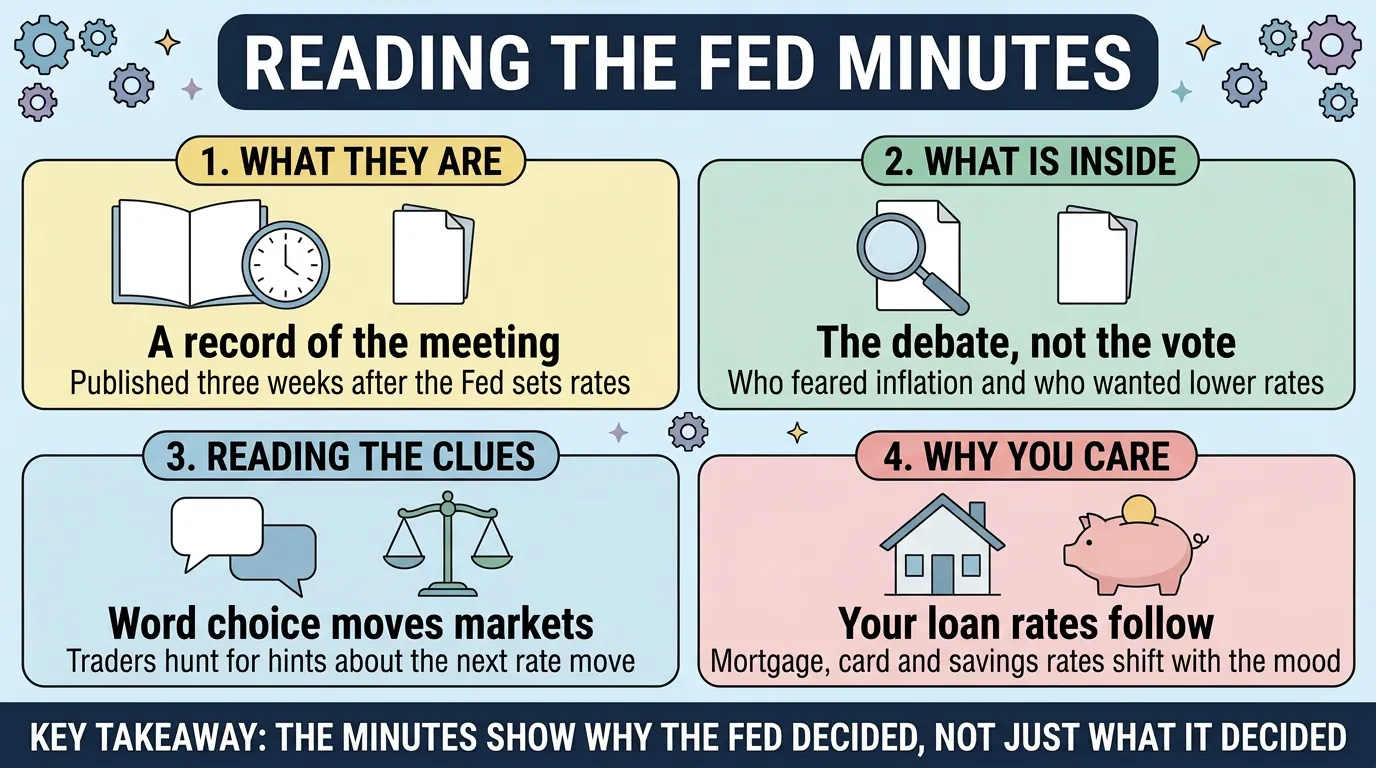
The Fed minutes are the official, detailed records of what was discussed during the FOMC policy meetings. Released precisely three weeks after each meeting at 2:00 PM Eastern Time, these documents act as a window into the committee's private debates.
Inside the minutes, you will find a thorough review of current economic conditions. This includes staff presentations on inflation, supply chain issues, and employment trends, alongside a detailed breakdown of the actual policy debate. Because the central bank is made up of multiple officials with varying opinions, the minutes reveal who is worried about rising prices, who is concerned about job losses, and how the group views the overall health of the global and domestic economy.
Decoding the Clues
Wall Street hates surprises, which is exactly why investors read the Fed minutes like detectives. The initial press release published right after a Fed meeting is usually short and highly scripted, making the minutes incredibly important because they provide the missing context. Financial analysts closely scrutinize the document for several key signals:
Tone and Language: Investors look for subtle shifts in vocabulary. A change from describing job growth as "strong" to "moderate," or debating whether inflation is "transitory" or "persistent," can send the stock market soaring or plummeting.
The Dissenting Voices: While the Fed often tries to project a united front, the minutes highlight the disagreements. Investors analyze how many members pushed to hike or cut rates, giving them a reliable roadmap for what the central bank might do at the next meeting.
Balance Sheet Plans: Beyond interest rates, the notes detail discussions about buying or selling trillions of dollars in government bonds. Investors analyze these technical debates because they directly impact the bond market and long-term borrowing costs.
How It Affects Everyday People
You do not need to own a massive stock portfolio to feel the impact of these meeting notes. The hints dropped in the Fed minutes eventually become real-world policies that affect your wallet.
Borrowing Costs: If the minutes heavily hint at future rate hikes to fight inflation, commercial banks will often proactively raise the cost of mortgages, auto loans, and credit cards before the Fed even takes official action.
Savings Rates: On the positive side, hints of higher central bank rates mean you will likely earn more yield on your high-yield savings accounts and certificates of deposit.
The Job Market: If the minutes show the Fed is deliberately trying to cool down the economy to stabilize prices, it usually signals that businesses will soon slow down their hiring processes or begin layoffs.
Summary
The Federal Reserve minutes are much more than a boring administrative record. Released three weeks after every major policy meeting, they are a highly anticipated economic roadmap. By revealing the internal debates, the language shifts, and the specific data points that the nation's top economic leaders are watching, these notes give investors and everyday consumers a critical sneak peek into where interest rates, the job market, and the broader economy are heading next.