A Simple Guide to Cryptocurrency and Why It Matters
Money has evolved over thousands of years, transitioning from gold coins to paper bills and eventually to digital numbers on a bank screen. Now, the world is experiencing another major shift in how we think about value, known as cryptocurrency. While it frequently makes headlines for its extreme price volatility, cryptocurrency is fundamentally important because it introduces a brand new, decentralized way to secure and transfer wealth globally without relying on traditional banks or governments.
What is Cryptocurrency?
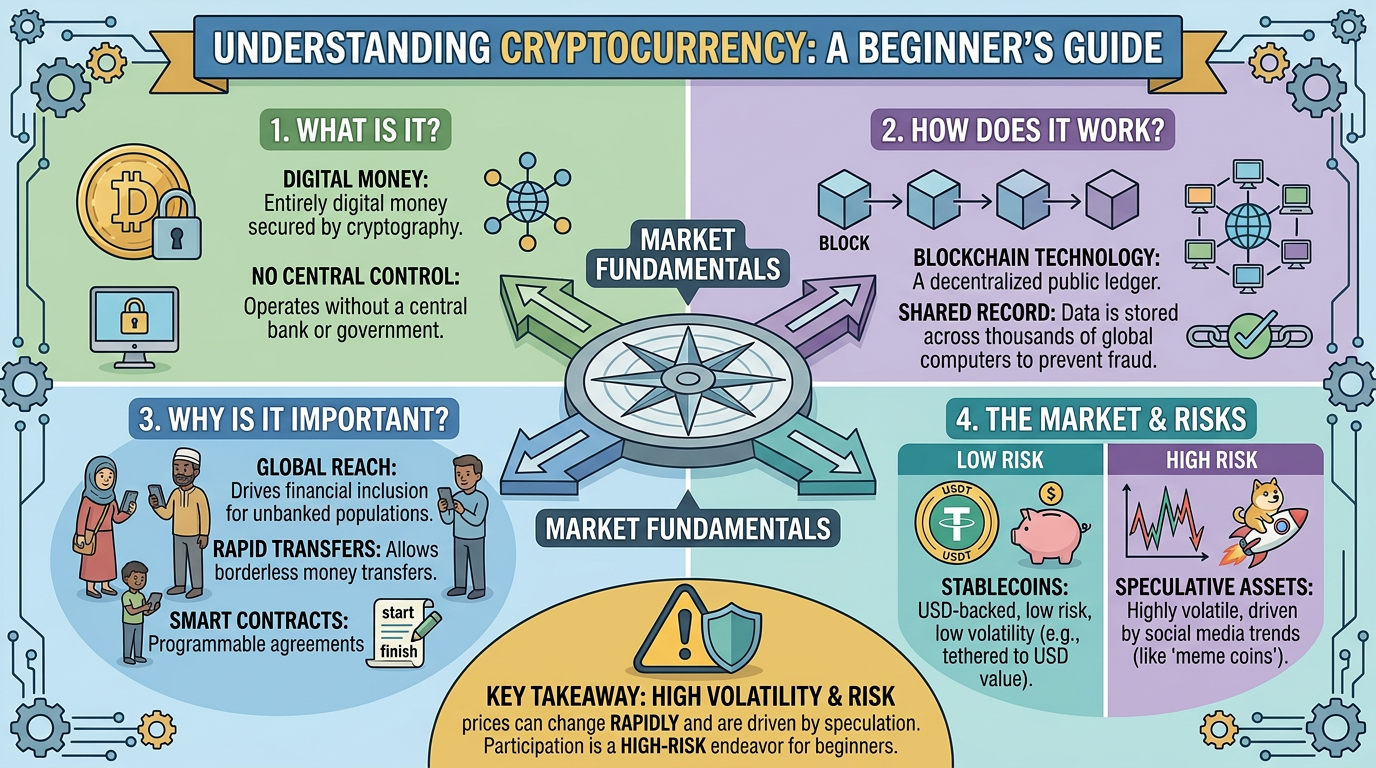
At its core, cryptocurrency is entirely digital money. Unlike the US dollar or the euro, it is not created, controlled, or distributed by any central bank or government. Instead, it relies on a global network of computers to manage transactions and distribute new coins. The "crypto" part of the name comes from the advanced cryptography (complex mathematical codes) used to keep the system secure and prevent anyone from cheating or counterfeiting the money.
The Engine Behind It: Blockchain
You cannot fully understand cryptocurrency without understanding the technology that powers it. This technology is called the blockchain.
Imagine a giant, digital spreadsheet that records every single transaction ever made with a specific digital coin. Now, instead of one bank keeping this spreadsheet hidden on a private server, thousands of identical copies are distributed to computers all over the world. Whenever someone buys, sells, or transfers crypto, all those computers must agree that the transaction is legitimate before it is permanently locked into the public spreadsheet. This decentralized approval process makes the system incredibly difficult to hack or manipulate.
Why Cryptocurrency Matters
Even if you never buy a single digital coin, the ideas behind cryptocurrency are forcing the traditional financial world to evolve. Here is why the technology is considered so important:
Financial Inclusion: Traditional banks dictate who can open an account, how much money they can send, and when they can send it. Crypto operates 24/7 and allows anyone with a basic internet connection to participate in the global economy. This is revolutionary for people living in countries with highly unstable banks or restrictive governments.
Borderless Transactions: Sending money across international borders using a traditional bank can take days and cost a significant amount in hidden fees. Cryptocurrency allows a user in Japan to send funds directly to a user in Brazil in a matter of minutes, completely bypassing traditional financial middlemen.
Programmable Money: Modern networks like Ethereum do more than just send basic payments. They allow developers to create "smart contracts." These are self-executing digital agreements that automatically move funds when certain conditions are met, which could eventually remove the need for expensive lawyers and brokers in many business deals.
The Reality of the Market
While the underlying technology is groundbreaking, the day-to-day reality of the cryptocurrency market is wildly unpredictable. The market features a massive spectrum of tokens, which can generally be divided into different categories based on their purpose and risk:
USD-Backed Stablecoins: Tokens like USDT or USDC are pegged directly to the value of a currency like the US dollar. These are designed to always equal exactly one dollar, offering a stable digital bridge for payments without the typical price swings.
Meme Coins: On the complete opposite end of the spectrum are tokens like Dogecoin or Shiba Inu. These are created primarily as internet jokes or cultural trends. They have little to no underlying usefulness, and their prices depend entirely on social media hype and community enthusiasm.
Because it is still a relatively new concept, the value of most non-stablecoin digital assets is driven heavily by hype, market trends, and momentum rather than traditional economic earnings. Currently, many people do not purchase these digital tokens to buy groceries or pay rent. Instead, they buy them hoping the price will rapidly increase in the short term so they can sell them to someone else for a quick profit. This dynamic means prices can skyrocket one week and crash the next. Because the market is heavily driven by these short-term price gambles, participating in it carries a very high level of financial risk.
Summary
Cryptocurrency represents a bold experiment in decentralized, digital finance. By using blockchain technology to remove traditional banks from the equation, it offers a faster and more open way to transfer value across the globe. However, because its current market is driven heavily by rapid price changes and high-risk trading behavior, it remains a highly volatile and unpredictable financial frontier.
